
Sunday, February 13
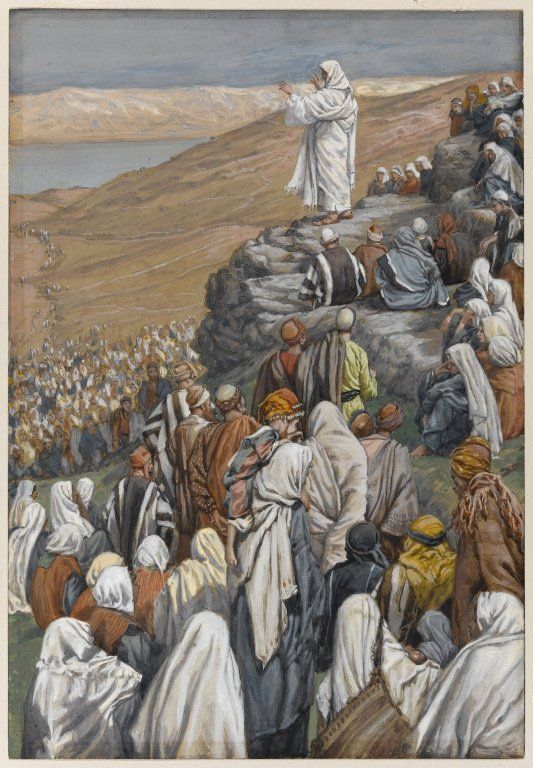
As you know we were not able to gather for in-person worship last Sunday (February 8) due to inclement weather. I was disappointed to not have the opportunity to preach the sermon I wrote as it was inspired by a phone conversation I had with a parishioner during the week - a conversation I am profoundly grateful for, that raised the question: how are we called to respond to this moment in time? What follows is not the full sermon, but more or less the “so what does this all mean for us” part of what I would have preached. Before reading further, I invite you to read the lessons, especially the Gospel, from last week. You can find them here.
Do you know what the mission of the Church is? I’ll give you a hint, it is printed on the front of our bulletins each week . . . The mission of the Church, as is stated on page 855 of The Book of Common Prayer is, “to restore all people to unity with God and each other in Christ.”
This phrase has consistently been at the forefront of my mind, regularly emerging in my own prayer and discernment. In these reflections I have also found myself wondering, how are we (individually, collectively, the entire body of Christ) doing at living out this call? So, beloved of God, I ask you, as we look out on the Church and the world, how are we doing at living into this vocation? Has this mission been achieved? Are we making progress towards its fulfillment? Have we missed the mark in living out this life of reconciliation? Or, option D, some combination of all of the above?
I wonder, how do we feel we are doing at living out this vocation here in this community? As the household of God at St. Thomas Church are we reconciled one to another?
Paired with this mission statement, I have also found myself regularly turning to words from St. Paul in his First Letter to the Corinthians “As it is there are many members, yet one body. The eye cannot say to the hand, ‘I have no need of you’ . . . If one member suffers, all suffer together with it; if one member is honored, all rejoice together with it” (full passage 1 Corinthians 12:21-27, NRSV). Most striking in this, what rings loudest in my ears, is Paul’s counsel that no part of the body can say to another, I have no need of you; no member of the community can say to another member - you are not welcome or needed here. I wonder if the Bishops of the Episcopal Church had this in mind when they recently wrote, “The question before us is simple and urgent: Whose dignity matters? Our faith gives a clear answer: everyone’s” (A Joint Letter from 154 Bishops of The Episcopal Church: Whose Dignity Matters?)
So what does all of this mean for us as the household of God at St. Thomas Church? A community that is not of one mind on any issue with the exception of our fondness for this place and our love and faith in Jesus. (For what it is worth, I do not think it is a bad thing that we represent a diversity of views and ideas). How are we being called right now to be the salt of the earth and light of the world in an increasingly bland and dark world?
First and foremost, I hope it goes without saying that it is contrary to our faith to villainize those we disagree with. As Jesus says in the Sermon on the Mount, “Love your enemies and pray for those who persecute you” (Matthew 5:44, NRSV). As our Bishops make clear in their statement, the dignity of everyone, without exception, matters. If we truly believe what we profess then we must recognize there is no such thing as an evil person - every single person who was, who is, who is to come is a beloved child of God; made in the image and likeness of God. That does not mean, however, that people do not do horrific and evils things; nor does it mean people should not be held accountable for their actions.
As we look at the full scope of Jesus’ ministry, as we look at the disciples and all that they did in Jesus’ name as they endeavored to be salt and light, there is something very important we need to notice. Everything Jesus does, everything the disciples do, is about addressing the needs before their eyes - what is afflicting the people right in front of them. This does not mean that they were ill-informed or did not care about the behavior of the leaders of the Roman Empire; but I think it does mean that they recognized where their ministry could do the most good.
There are innumerable needs and things to be done here in this community and around our state. Instead of stewing in anger, righteous as it may be, at things happening that are far beyond our control let us focus our attention locally where we can do the most good. I invite you to explore local, independent news outlets tracking local legislation and community meetings so that you can go and make your voice heard. I invite you to pay attention to our weekly email newsletter, the bi-weekly news from the Diocese, and the social media accounts of communities throughout our Diocese which regularly share opportunities to live out our faith in a multitude of ways. I invite you to go to the parish library and read the books on anti-racism, immigration, indigenous communities, full-inclusion of LGBTQ+ people, interfaith connections, and radical welcome of all people in the Church regardless of difference that we might be better informed and educated on the issues of our day and the intersection of those issues with our lives of faith. I especially invite those of you who did not participate in the formation and education programs around those topics to do so. I invite each and everyone you to commit yourselves to coming to church every single Sunday we are here that our worship might propel us into the world to make our faith incarnate. I invite you to talk to one another, respectfully and honoring the different view points and opinions we have, that we might learn from one another and be an example to this fractured world of what is possible when dignity and respect are afforded to all. I invite you, to, as Bishop Knisely recently wrote to the clergy of this Diocese, have grace with one another trusting that we are all doing the best we can to discern how we are being called to respond to these times. I invite you, for as long as I am serving as your Rector, to come and talk with me - let me buy you a cup of coffee or tea - and discern with you how God is calling you in this moment.
There is plenty of meaningful work to do, so let us not waste time on that which will do nothing other than add to the hate and vitriol around us. Let us be about the work of the Gospel and focus our attention on where we can make a difference.
Beloved of God, I dare you to actually be salt and light. If you accept this challenge I think you might just find that there are indeed brighter days ahead.